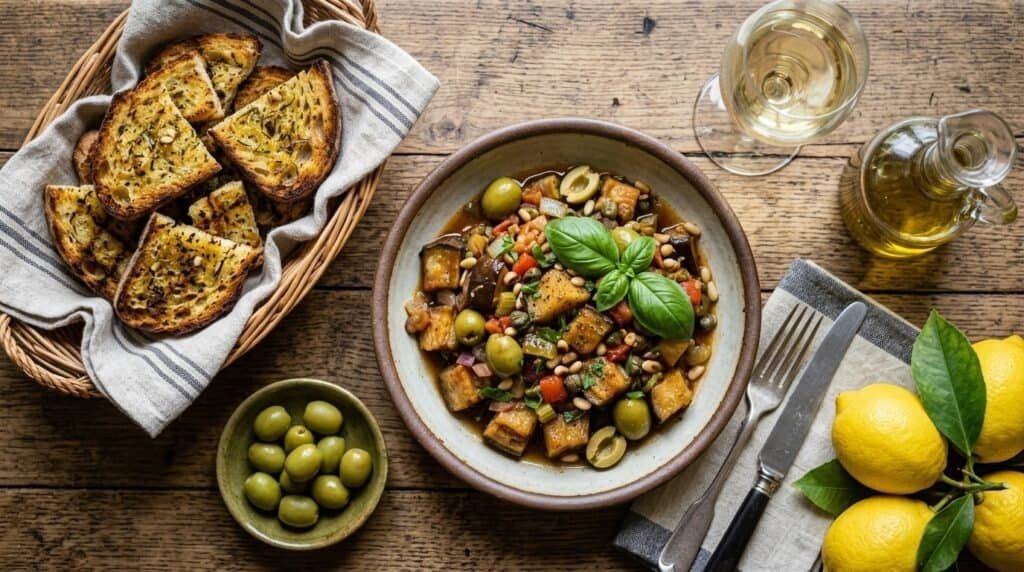
Some dishes get better the longer they sit. Caponata is one of them. It is a Sicilian eggplant stew built on a simple idea: soft, silky eggplant, sweet onion, juicy tomato, salty olives and capers, all pulled together with a splash of vinegar and a touch of sugar. The result is a bowl that tastes sweet, tangy, salty and rich at once.
It works as a side dish, a topping for toasted bread, a pasta sauce, or a main course with a green salad. It is also very forgiving. It tastes good warm, at room temperature or cold from the fridge, and it holds up for days.
This guide covers the ingredients, the cooking method, the small steps that keep the eggplant from turning greasy or mushy, how to balance the sweet and sour, and how to serve and store it.
What Is Caponata?
Caponata comes from Sicily, where it is served as an antipasto or a side dish. The flavor is called agrodolce, Italian for sweet and sour. Recipes vary from town to town. Some add peppers, some add raisins, some use almonds instead of pine nuts. The version here follows the classic idea: eggplant, celery, onion, tomato, green olives, capers, vinegar and a little sugar.
What makes it different from a typical vegetable stew is the vinegar and sugar. They cut through the richness of the olive oil and eggplant and give the dish its signature tang.
Ingredient Notes
- Eggplant: Choose firm eggplants that feel heavy for their size with smooth, shiny skin. Small to medium ones have fewer seeds and less bitterness. Leave the skin on. It holds the cubes together and adds color.
- Olive Oil: Eggplant soaks up oil like a sponge, which is why this recipe uses a generous amount. A good extra virgin olive oil adds flavor, so it is worth using here.
- Green Olives: Mild, buttery varieties like Castelvetrano work well. Strongly brined olives can overpower the dish, so taste one first.
- Capers: Rinse them well. Brined capers add a sharp, salty pop, and rinsing keeps the dish from turning too salty.
- Tomatoes: Canned diced tomatoes give steady results year-round. In peak summer, about 1½ cups of chopped ripe tomatoes work well too.
- Vinegar and Sugar: These two build the sweet and sour balance. Red wine vinegar is classic. White wine vinegar works as a substitute.
- Pine Nuts: They add a soft, buttery crunch. They are expensive, so slivered almonds are a good substitute.
Pro Preparation & Cooking Rules
Tips for Better Caponata & Common Mistakes
- Keep Cubes Uniform: Even pieces cook at the same speed so none turn to mush while others stay firm.
- Use a Wide Pan: More surface area means better browning and faster evaporation, yielding a thicker sauce.
- Toast Pine Nuts Dry: Warm them in a dry pan for 2 to 3 minutes, shaking often, until lightly golden. Watch closely as they burn fast.
- Don’t Overcrowd or Overcook: Overcrowding steams the eggplant. Cook until soft but still holding its shape.
- Don’t Serve Right Away: Freshly cooked caponata tastes flatter and sharper. Resting is what rounds it out.
Variations Worth Trying
- Add Bell Pepper: Dice half a red or yellow bell pepper and cook it with the onion for extra sweetness and color.
- Add Raisins: Stir in 2 tablespoons of golden raisins with the olives for a traditional Sicilian sweet touch.
- Use Almonds: Swap pine nuts for toasted slivered almonds.
- Make It Spicier: Increase red pepper flakes or add a sliced fresh chili with the garlic.
- Add Fresh Mint: A little chopped mint at the end gives a bright, cool contrast.
- Roast the Eggplant: For less oil, toss cubes with 2 tablespoons of oil and roast at 425°F (220°C) for 20 to 25 minutes before adding to the sauce.
How to Serve Caponata
- On toasted bread as a starter or snack (crostini/bruschetta).
- Alongside grilled fish or chicken.
- Tossed with warm pasta for a quick main.
- Over polenta or creamy white beans.
- As part of a mezze or antipasto board with cheese, cured meats, and marinated vegetables.
- Spooned over a sandwich with fresh mozzarella.
- Wine Pairing: Crisp dry white wine (Vermentino or Grillo) or a light red (Nero d’Avola).
Make-Ahead, Storage, and Reheating
Make Ahead: Caponata is better made a day in advance. Store covered in the fridge overnight, then bring to room temperature before serving.
Storing Leftovers: Keep in an airtight container in the refrigerator for up to 5 days.
Reheating: Serve cold, room temperature, or warm gently in a pan over low heat for 5 to 8 minutes.
Freezing: Freeze in an airtight container for up to 2 months. Thaw overnight in the fridge. (Eggplant softens slightly upon thawing, but flavor remains great).
Frequently Asked Questions
Do I have to salt the eggplant?
Not always. Salting helps with bitterness and oil absorption, especially for larger/older eggplants. Small, fresh ones are fine without it.
Why is my caponata too sour?
Too much vinegar or not enough sugar. Add a pinch of sugar, simmer for a minute, and taste again. Resting also softens sharpness.
Why is my caponata too oily?
Eggplant absorbs oil fast. Drying cubes well and browning in batches helps. You can also blot lightly with paper towels or use the roasting method.
Can I make caponata without capers?
Yes, but it loses some salty punch. Add a few extra olives to compensate.
Can I use frozen eggplant?
Not ideal as it releases water and turns soft. Fresh gives much better texture.
Is caponata vegan?
Yes, as written. It contains no gluten, dairy, or eggs (bread is the only gluten source).
Can I serve it hot?
Yes, but many prefer room temperature where flavors are fullest.
What can I use instead of pine nuts?
Toasted almonds, walnuts, or sunflower seeds all work well.
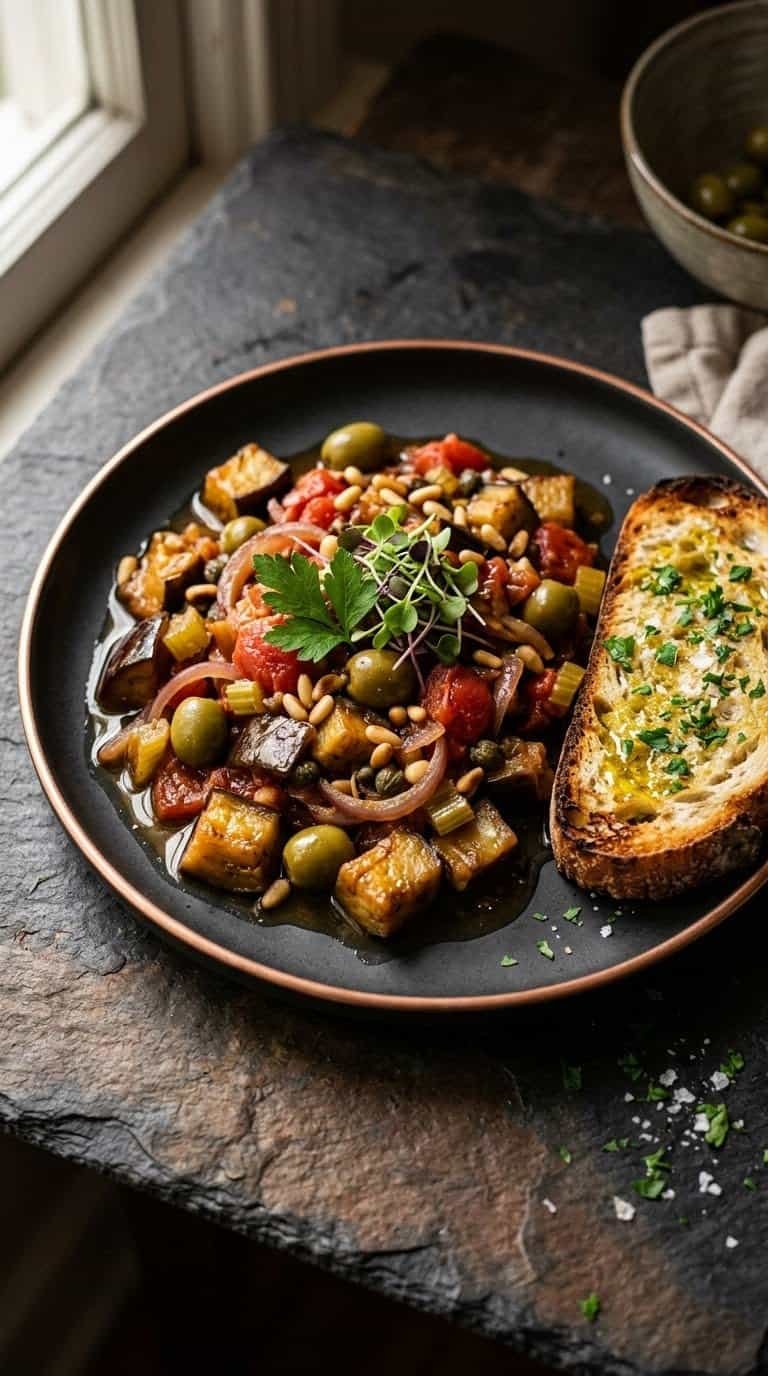
Sicilian Caponata (Sweet and Sour Eggplant Stew)
Ingredients
Method
- Optional Salting: Toss cubed eggplant with 1 tsp salt in a colander and let sit for 30 minutes. Rinse briefly and pat completely dry.

- Brown Eggplant: Heat 3 tbsp olive oil in a wide skillet over medium-high heat. Brown half the eggplant for 5–6 minutes. Move to a plate, add 2 tbsp oil, and brown the second batch. Set aside.
- Soften Vegetables: Lower heat to medium, add 1 tbsp oil, sliced onion, diced celery, and a pinch of salt. Cook 7–8 minutes until soft and golden.

- Add Garlic: Stir in minced garlic and red pepper flakes. Cook 1 minute until fragrant.
- Simmer Tomatoes: Add diced tomatoes with juices. Simmer for 10 minutes until sauce thickens slightly.
- Sweet and Sour: Stir in red wine vinegar and sugar together. Cook 2 minutes, taste, and adjust sweetness/sourness if needed.

- Combine & Finish: Return eggplant to the pan along with green olives, capers, and black pepper. Cover partially and simmer on low for 10 minutes until silky and tender.
- Rest: Remove from heat and let sit for at least 20 minutes for flavors to meld.
- Garlic Toast: Brush bread slices with olive oil and toast at 400°F (200°C) for 5–6 minutes. Rub warm slices with garlic clove and sprinkle with flaky salt.
- Serve: Top caponata with toasted pine nuts and fresh herbs. Serve warm or at room temperature with garlic toast.